EA FX Markets Precision Forex Intelligence for Serious Traders

EA FX Markets

Precision Forex Intelligence for Serious Traders

Latest Articles

Five Letters, One Frozen Basket: Why the Dollar Index Is the Wrong Compass
Market Analysis

Five Letters, One Frozen Basket: Why the Dollar Index Is the Wrong Compass

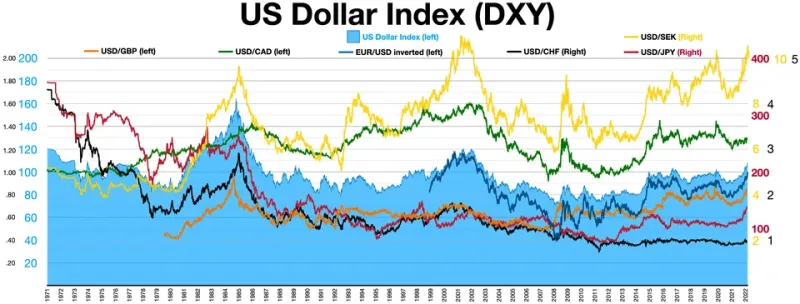
The US Dollar Index is treated by much of the retail world as the definitive measure of dollar strength. Its heavy euro weighting, fixed 1999-era basket, and exclusion of America's largest trading partners mean it can rise while the dollars a trader actually holds are falling.

The Gap You Cannot Stop Out Of: Building a Weekend Risk Protocol for USD Pairs
Risk Management

The Gap You Cannot Stop Out Of: Building a Weekend Risk Protocol for USD Pairs

Election results, central-bank leaks, and geopolitical shocks rarely wait for London. For US traders holding dollar pairs into the weekend, the real risk is not direction but the mechanics of the Sunday open — and stop-loss orders offer far less protection than most assume.

The Election Most Forex Traders Never File: Section 988 and the Arithmetic of Year-End
Trading Strategy

The Election Most Forex Traders Never File: Section 988 and the Arithmetic of Year-End

American spot forex traders default into ordinary-income treatment under Section 988, yet many plan their year as if capital-gains rules apply. This guide maps the default rule, the narrow 60/40 election, and the recordkeeping gaps that decide how much of a trading year survives April.

Beyond the Big Five: Overlooked Pairs That Reward Patient American Traders
Market Analysis

Beyond the Big Five: Overlooked Pairs That Reward Patient American Traders

Crowded majors offer liquidity but also noise, spreads that widen at the worst moments, and competition from every algorithm on the planet. A handful of less glamorous pairs quietly offer cleaner structure and workable session timing for US-based traders.

Bloomberg on a Budget: Assembling Your Own Currency Analytics Workbench
Trading Strategy

Bloomberg on a Budget: Assembling Your Own Currency Analytics Workbench

Institutional desks pay five figures a month for analytics that most retail traders never attempt to replicate. A disciplined US trader with free APIs and a spreadsheet can build a surprisingly capable substitute.

The Financing Clause Nobody Reads: Why Swap Rates Should Decide Your Next Broker
Trading Strategy

The Financing Clause Nobody Reads: Why Swap Rates Should Decide Your Next Broker

American traders obsess over spreads and commissions while ignoring the overnight financing terms that quietly compound against them. For anyone holding positions beyond a day, the swap schedule is not fine print — it is the business model.

Calendar-Driven Currency Flows: Exploiting the Predictable Distortions That Emerge at Month-End and Quarter-End
Trading Strategy

Calendar-Driven Currency Flows: Exploiting the Predictable Distortions That Emerge at Month-End and Quarter-End

Every month, and with greater intensity every quarter, a predictable set of institutional cash flow obligations converges to distort FX prices in ways that have little connection to fundamental economic conditions. Corporations hedging foreign revenues, asset managers rebalancing equity portfolios, and pension funds executing mandated currency overlays all concentrate their activity in the final days of each calendar period. US traders who understand the mechanics of these flows can identify spe

Latency in Plain Sight: How Retail FX Charting Technology Obscures True Price Discovery
Market Analysis

Latency in Plain Sight: How Retail FX Charting Technology Obscures True Price Discovery

Most retail forex platforms present their charts as windows onto live market action, but the underlying data pipelines tell a different story. Algorithmic smoothing, aggregation delays, and tiered data licensing create a version of price reality that consistently lags institutional systems. Understanding where these distortions originate — and how to work around them — is a prerequisite for any serious US trader.

Currency Shock Preparedness: Constructing a Tail Hedge When Geopolitical Risk Moves Faster Than Price
Trading Strategy

Currency Shock Preparedness: Constructing a Tail Hedge When Geopolitical Risk Moves Faster Than Price

Geopolitical shocks — from sudden sanctions regimes to contested election outcomes — have a documented history of producing currency dislocations that exhaust retail traders before a coherent response is possible. Building a pre-positioned hedging framework using options and carefully selected currency pairs can transform these chaotic events from threats into structured opportunities. This article outlines a practical, low-cost approach designed for serious US-based forex participants.

Market Analysis

Behind the Quote: What Your Retail FX Broker's Price Feed Is Really Showing You

The price your retail forex broker displays on screen is not a direct window into the interbank market — it is a reconstructed, filtered, and often delayed interpretation of institutional liquidity. Understanding how that transformation occurs, and what it costs you in execution quality, is one of the most consequential pieces of knowledge a serious US trader can possess.

Trading Strategy

When Treasuries Spike: Capturing Exotic Currency Dislocations Before the Market Catches Up

Sudden surges in US Treasury yields trigger cascading repricing events in exotic currency pairs that most retail traders never see coming. Understanding the mechanical link between American rate expectations and emerging market currency volatility can open a window of opportunity that closes quickly once institutional consensus forms. This tactical guide helps US-based traders position themselves ahead of the crowd.

Market Analysis

The Speed Gap: How Retail Forex Data Feeds Fall Behind Institutional Desks and What American Traders Can Do About It

The difference between a profitable trade and a losing one can hinge on microseconds of data latency that most retail traders never see. This analysis examines the technological infrastructure divide separating retail forex brokers from institutional market makers, and offers concrete strategies for American traders looking to minimize invisible friction costs in their execution.

Phantom Liquidity: How Tight Spreads Disappear When Asian Session Gaps Open
Trading Strategy

Phantom Liquidity: How Tight Spreads Disappear When Asian Session Gaps Open

Many US retail traders assume the spreads quoted during active New York hours represent a consistent baseline across all trading windows. That assumption proves costly when liquidity evaporates during the Asia-Europe handoff, triggering spread widening, slippage, and execution failures that can devastate carefully planned positions. Understanding the mechanics behind phantom liquidity is not optional — it is a prerequisite for trading forex with any degree of precision.

Overnight Financing as a Trading Edge: How Swap Rate Differentials Quietly Build Consistent Forex Returns
Trading Strategy

Overnight Financing as a Trading Edge: How Swap Rate Differentials Quietly Build Consistent Forex Returns

While most retail forex traders fixate on price action and volatility, a quieter and arguably more reliable profit mechanism operates in the background of every open position. Swap rate differentials — the interest earned or paid for holding currency pairs overnight — represent one of the most systematically underutilized edges available to American retail traders. This analysis breaks down the mechanics, the math, and the disciplined methodology required to exploit them without falling into the

Minor Pair Pricing Gaps: A Practical Framework for Retail Traders Seeking Cross-Rate Opportunities
Market Analysis

Minor Pair Pricing Gaps: A Practical Framework for Retail Traders Seeking Cross-Rate Opportunities

Minor currency pairs such as EUR/GBP and AUD/NZD periodically trade at prices that diverge from their theoretically derived values, creating measurable inefficiencies that attentive retail traders can exploit. This analysis outlines a structured approach to identifying those dislocations, understanding their causes, and executing trades that benefit from pricing normalization without requiring the liquidity depth of major pairs.

False Breakouts and Fading Rallies: How Commodity Currencies Lure Retail Traders Into Losing Positions
Trading Strategy

False Breakouts and Fading Rallies: How Commodity Currencies Lure Retail Traders Into Losing Positions

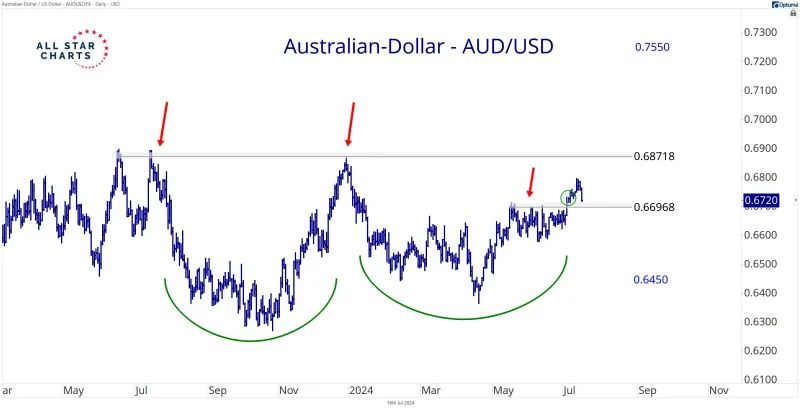
AUD/USD and USD/CAD are notorious for generating powerful momentum signals that dissolve just as retail traders commit their largest positions. Understanding the mechanics behind commodity-driven currency mispricing — and the institutional behavior that exploits it — is essential for any serious forex participant operating in today's volatile markets.

Trading Strategy

Reading the Invisible Hand: How Order Flow and Market Microstructure Give Retail Traders a Central Bank Edge

Central banks rarely telegraph their full intentions, but the forex market's own internal mechanics often do. By mastering order flow analysis and market microstructure, disciplined retail traders can decode institutional positioning before price moves become obvious. This guide walks through the practical tools and data sources that serious US-based traders use to gain an informational edge.

Market Analysis

Sterling Under Pressure: Trading GBP/USD as the Bank of England and Fed Chart Diverging Courses in 2026

The widening gap between Bank of England and Federal Reserve monetary policy is injecting fresh volatility into GBP/USD, creating both risk and opportunity for US-based traders. With UK inflation proving stubborn, growth faltering, and political uncertainty adding another layer of complexity, the pound's trajectory in 2026 is far from predictable. Here is what the data suggests and how disciplined traders can position themselves accordingly.

Market Analysis

When Your Hedge Betrays You: Navigating Correlation Breakdown in Major Currency Pairs

The assumption that EUR/USD and GBP/USD move in lockstep has guided countless hedging strategies — until market stress exposes that assumption as dangerously fragile. This analysis examines how correlation regimes shift without notice, why conventional portfolio hedges can amplify rather than reduce risk, and what practical tools traders can use to stress-test their positioning before the breakdown occurs.

Chasing Yield Into a Trap: How Retail Traders Misread Carry Trade Reversals
Trading Strategy

Chasing Yield Into a Trap: How Retail Traders Misread Carry Trade Reversals

Carry trades are among the most seductive strategies in forex — until they aren't. This analysis examines why American retail traders repeatedly find themselves on the losing side of carry unwinds, and what behavioral and technical signals could save their portfolios before the reversal strikes.