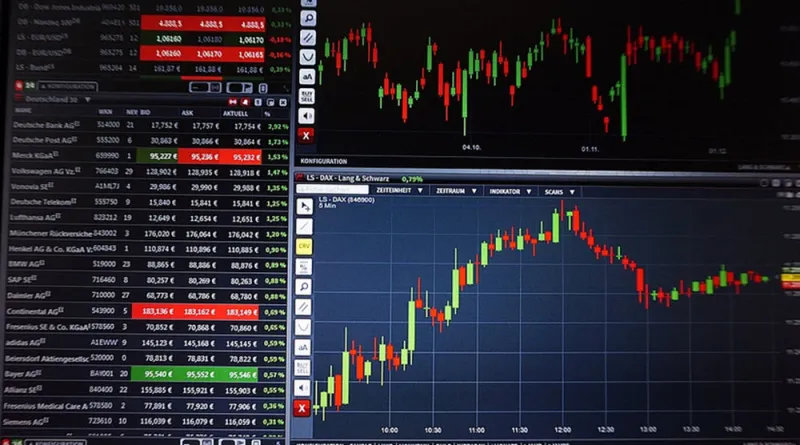
The Second Trade Is the Dangerous One: A Pre-Commitment Protocol for Post-Loss Forex Decisions

Photo: Jules & Jenny from Lincoln, UK, CC BY 2.0, via Wikimedia Commons
A stop-out is not just a loss; it is a decision point. For many retail forex traders, the most expensive trade of the day is not the one that hit the stop. It is the second trade, entered minutes later, with larger size and a looser plan, in an attempt to erase the first loss. The market does not know or care about that loss. The trader's brain does.
Revenge trading is often described as an emotional failure, but that framing is too simple. It is a predictable response to a predictable set of psychological pressures: loss aversion, the desire to restore a prior account balance, the illusion of control after a random outcome, and the physical rush that comes from watching price move against a position. Understanding those pressures is the first step toward designing a system that does not depend on willpower in the moment.
Why the Post-Loss Brain Seeks Another Trade
Behavioral finance has long observed that losses loom larger than equivalent gains. For a trader, that asymmetry creates a powerful urge to return to the market immediately. The logic feels practical: if one trade can lose money, another trade can make it back. The problem is that the second trade is usually taken with impaired judgment and elevated size.
There is also a cognitive narrowing effect. After a loss, attention tends to tunnel onto the most recent price action. The trader sees a setup that may not exist, or sees a valid setup but ignores the broader context. The result is a trade that would not have passed the same checklist an hour earlier.
Market conditions reinforce the trap. Volatility often rises around the same events that cause stops to trigger. Spreads widen, liquidity thins, and price moves become more erratic. The trader who re-enters immediately is not trading the same market that produced the original setup. They are trading a faster, noisier version of it.
Two Composite Case Studies
The following examples are composites drawn from common patterns, not records of specific clients.
Case Study 1: The Double-Down. A trader risks 1 percent of the account on a EUR/USD long into the US session. The stop is hit during a headline-driven spike. Within ten minutes, the trader re-enters in the same direction with 2 percent risk, widening the stop to avoid another quick exit. Price continues lower. By the end of the session, the account is down 6 percent, and the original loss is no longer the problem.
Case Study 2: The Stop Widener. A trader shorts USD/JPY and is stopped out for a small loss. Convinced the move was a false break, the trader re-enters with the same size but moves the stop 30 pips farther away. The trade goes against them again. This time, the loss is three times larger than the first, and the trader closes the position in frustration rather than at a planned level.
In both cases, the technical setup was secondary. The decisive factor was the decision to trade immediately after a loss, with size and rules that had changed under emotional pressure.
A Pre-Commitment Protocol
The most reliable defense is not a stricter mindset. It is a written protocol that removes discretion at the moment of loss.
- Set a daily loss limit before the session begins. When the limit is reached, trading stops for the day. No exceptions for high-conviction setups.
- Impose a cooling-off period after any stop-out. Sixty minutes is a practical minimum. During that time, no new orders, no chart refresh loops, and no position-size calculations.
- Lock position size to the pre-session plan. If the plan says 0.5 percent risk per trade, a post-loss trade cannot use 1 percent. The size is fixed before the first trade is placed.
- Require a new setup, not a rematch. Re-entry is allowed only if a fresh checklist condition appears after the cooling-off period. The previous losing trade is irrelevant to the new decision.
- Never move a stop away from price. If the stop was wrong, the trade is wrong. Widening it converts a planned loss into an unplanned one.
- Use broker controls where available. Daily loss alerts, maximum order size settings, and temporary trading locks can enforce what the trader already knows.
- Journal the loss before the next trade. Record what happened, what was controllable, and what was not. This creates a pause and separates the outcome from the decision quality.
Breaking the Cycle in Practice
The protocol only works if it is written down before the session and reviewed after it. A trader who decides on a cooling-off period while staring at a losing position is already too late. The decision must be made when the account is calm and the rules feel abstract.
It also helps to define what counts as a loss. A stop-out is obvious, but a trade closed early for a small loss can trigger the same urge. The protocol should apply to any realized loss that exceeds a predetermined threshold, not just to stops.
Finally, track the behavior separately from the profit and loss. A trader can have a winning day and still violate the protocol. Over time, the goal is to make the second trade rare, then exceptional, then unnecessary. The first loss is part of trading. The second trade, taken in anger, is a choice.