After the Ballots: A Currency Trader's Guide to the 2026 Midterm Lame Duck and Beyond

Photo: PLBechly, CC BY-SA 4.0, via Wikimedia Commons
American voters have just closed the books on the 2026 midterm elections, and currency markets are now working through the aftermath rather than the campaign. For dollar traders, the useful question is not who won a particular seat but how the political configuration changes the odds of fiscal action, trade policy, and Federal Reserve appointments. The midterm cycle is a reminder that election risk in FX is rarely a single-day event; it is a sequence of legislative and procedural dates that can keep the dollar bid or offered long after the ballots are counted.
The Midterm Premium Is Usually Short-Lived
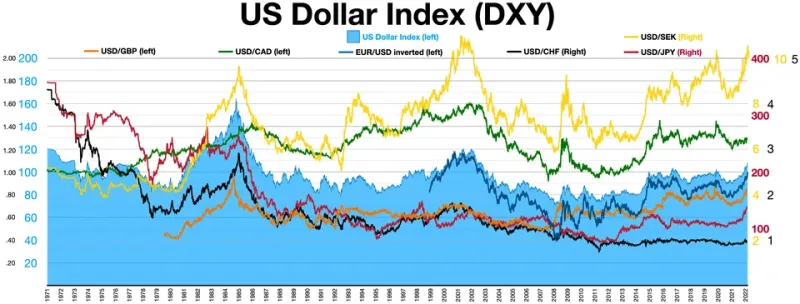
History offers a rough guide. Around the 2014, 2018, and 2022 midterms, the dollar index tended to build a modest uncertainty premium in the weeks before voting, then give some of it back once the result was clear. The pattern is not mechanical, and it is easily overwhelmed by inflation data or central-bank guidance. Still, the logic is consistent: markets price the possibility of a unified government that can pass a large fiscal package, then reprice when divided power makes sweeping legislation less likely.
In 2026, the same principle applies, but with a twist. The dollar entered the election season supported by rate differentials and a resilient US economy. That means the post-election reaction may be less about relief and more about whether the new Congress can avoid a fiscal accident. A clear result reduces one source of uncertainty; it does not remove the next one.
The Lame Duck Is the Live Catalyst
The period between the election and the new Congress is often dismissed as a formality. For FX traders, it is anything but. Appropriations bills, defense authorization, sanctions packages, tax extenders, and emergency spending can all move during the lame-duck session. Each has a dollar channel.
A protracted spending fight can lift front-end Treasury yields as the market prices a higher risk of shutdown or delayed issuance. That can support the dollar against low-yielding currencies, but it can also damage risk sentiment and weigh on commodity currencies. The net effect depends on whether the move is driven by rates or by risk aversion. Traders should watch the spread between Treasury bill rates and the policy rate, along with the dollar index, rather than assuming a single directional outcome.
Trade policy is the second live channel. Midterm results can change the appetite for tariffs, export controls, and sanctions. Even the expectation of a shift in committee leadership can move currencies with large trade exposures. For the dollar, the effect is often indirect: policy uncertainty tends to support the world's reserve currency during the headline phase, then fade as the details become known.
Pairs That Feel Legislative Risk Most
Not every currency pair carries the same political beta. The table below is a practical map, not a forecast.
| Pair | Primary sensitivity | What to watch |
|---|---|---|
| EUR/USD | Broad dollar beta and trade rhetoric | Fiscal deadlines, tariff headlines, rate differentials |
| USD/CAD | US demand, energy, and cross-border trade | Appropriations, energy policy, tariff language |
| USD/MXN | Trade, immigration, and remittance policy | Committee leadership, sanctions, nearshoring flows |
| USD/JPY | Rate differentials and safe-haven demand | Fed appointments, Treasury yields, risk sentiment |
EUR/USD is the cleanest expression of broad dollar risk, but it is also the pair most likely to be whipsawed by headlines that do not survive the week. USD/CAD is more specific: it responds to US growth expectations and energy prices, and it can react sharply to trade policy that affects North American supply chains. USD/MXN is the highest-beta expression of US political risk among major pairs, which makes it useful for observation and dangerous for oversized positions. USD/JPY remains a rates trade first and a politics trade second.
A Date-Driven Playbook Without Headline Chasing
The mistake many retail traders make is to treat election headlines as trade signals. A better approach is to build a calendar of known dates and then decide, in advance, how much risk to carry into each one.
First, mark the procedural dates: certification, leadership votes, appropriations deadlines, and the Treasury refunding announcements. Second, classify each date by its likely market channel: rates, trade, or risk sentiment. Third, reduce position size into dates where the channel is ambiguous. Fourth, require a confirmed price reaction before entering. A headline that moves EUR/USD by 20 pips in the first minute is not a setup; it is a liquidity event.
For traders using technical levels, the post-election period is a good time to widen invalidation levels rather than tighten them. Political headlines can produce false breaks of obvious ranges. If a level fails and the pair reclaims it within the same session, the break was likely a headline trap. Treat the reclaim as information and avoid adding to the losing side.
What to Watch Into 2027
The next phase of dollar risk will be shaped by three things: the composition of key committees, the size of any fiscal package that can actually pass, and the pace of Federal Reserve appointments. None of these is a one-day event. Together, they will determine whether the dollar's rate support persists or fades.
For now, the 2026 midterms have removed one layer of uncertainty. They have not removed the need for a plan. The traders who do best in political cycles are rarely the ones who predict the result. They are the ones who map the dates, size the risk, and let the market prove the direction before they commit capital.