Phantom Liquidity: How Tight Spreads Disappear When Asian Session Gaps Open
For traders operating out of the United States, the forex market's reputation as a 24-hour arena can create a dangerously misleading sense of security. The logic seems straightforward: if the market never closes, liquidity must always be present. In practice, however, the currency market breathes in cycles. And when volume contracts sharply — particularly during the narrow window between the close of Asian trading and the opening of European centers — the spreads your broker advertised quietly double, triple, or disappear into execution gaps that bear no resemblance to the pricing you tested in a demo account.
This phenomenon, commonly referred to as liquidity evaporation, is one of the most underappreciated risks in retail forex. It does not announce itself. It simply arrives, extracts capital from unsuspecting positions, and retreats before most traders even review their statements.
Why the Asia-Europe Handoff Is the Market's Most Dangerous Seam
The global forex session structure creates three primary liquidity windows: Asia (Tokyo), Europe (London), and North America (New York). Each window carries its own volume profile, and where these windows overlap — particularly the London-New York crossover — liquidity reaches its peak. Major pairs like EUR/USD and GBP/USD see their tightest spreads and deepest order books during these hours.
The inverse is equally true. The transition period between the close of Tokyo trading and the opening of Frankfurt and London — roughly 3:00 AM to 7:00 AM Eastern Time — represents the thinnest liquidity window in the daily cycle. Institutional desks are either closing out Asian books or have not yet activated European operations. Interbank market makers reduce their quote depth. The result is a market that looks open on paper but functions with a fraction of its normal capacity.
For US traders who set overnight positions or operate automated strategies without session filters, this window is a minefield.
The Mechanics of Spread Widening: What Your Broker Isn't Advertising
Retail forex brokers earn revenue primarily through the spread — the difference between the bid and ask price on any given currency pair. During high-volume sessions, competition among liquidity providers keeps spreads narrow. A broker quoting 0.8 pips on EUR/USD during New York hours may be passing through genuine interbank pricing with a modest markup.
During the Asian session gap, that same broker faces a very different cost structure. With fewer liquidity providers willing to quote tight markets, the broker's raw cost of pricing rises. Some brokers absorb that increase; most pass it directly to the retail client. A pair that traded at 1.0 pip in the afternoon may widen to 4, 6, or even 10 pips in the early morning hours. For scalpers or traders using tight stop-losses, this single factor can transform a viable strategy into a consistent money-loser.
The problem compounds with limit orders. Many traders assume that a limit order executes at the specified price or better. In a liquid market, this is largely true. During thin sessions, however, price can gap through a limit level — particularly around news events or session opens — leaving the order filled at a materially worse price than anticipated. This is not a broker malfunction in the legal sense; it is the predictable outcome of insufficient depth at the order level.
Slippage and Execution Failures: The Hidden Tax on Overnight Positions
Slippage — the difference between the expected execution price and the actual fill — is a familiar concept in equity markets, particularly around earnings gaps. In forex, traders often underestimate its relevance because the market's continuous nature seems to preclude large gaps. That assumption fails during the Asia-Europe transition.
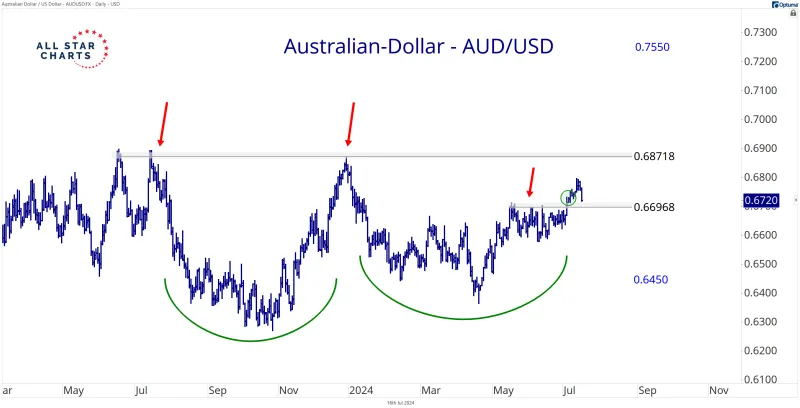
Consider a US trader who holds a position in AUD/USD overnight. Australian economic data releases during the Tokyo session can trigger sharp moves that, by the time European liquidity arrives, have produced a gap in price with no clean fills in between. A stop-loss order placed at a specific level may execute five to fifteen pips beyond that level, depending on how quickly the market moved and how many liquidity providers were quoting at the time.
Execution failures — instances where orders simply do not fill, or fill only partially — are less common but do occur during extreme low-liquidity events, including unexpected geopolitical announcements made outside of normal business hours. US traders, whose domestic session ends well before Asian liquidity reaches its own peak, are structurally exposed to these gaps in ways that European-based traders may not be.
Identifying Genuine Liquidity Before You Commit Capital
The first practical step is developing an honest picture of when your specific trading pairs carry sufficient depth. Not all pairs behave identically during thin sessions. EUR/USD and USD/JPY maintain comparatively better liquidity even in off-peak hours due to their global relevance. Pairs like EUR/GBP, AUD/NZD, or any minor involving the Swiss franc can see spreads widen dramatically during the Asia-Europe seam.
Several brokers now provide real-time or historical spread data by time of day. Reviewing this data for your preferred pairs over a 30-day period will reveal a clear pattern of when spreads expand. Treat any window where spreads consistently exceed two to three times their median value as a no-trade zone unless you have a compelling, time-sensitive reason to act.
Volume indicators adapted for forex — such as tick volume proxies or data from CME currency futures, which carry actual reported volume — can also serve as a liquidity gauge. When tick volume drops sharply, treat it as a signal that the market's apparent pricing may not reflect executable depth.
Tactical Adjustments for US Traders Operating Across Sessions
For traders who cannot or do not wish to avoid overnight positions, several tactical adjustments can reduce exposure to liquidity evaporation.
Widen your stop-loss buffer during low-liquidity windows. A stop placed five pips from current price during New York hours may be reasonable. The same stop during the Asia-Europe handoff invites a false trigger from a temporary spread spike, not a genuine directional move.
Avoid placing new entry orders during the thin window. If your strategy calls for a breakout entry, confirm that the breakout is occurring during a session with genuine participation. A price move of 20 pips at 4:00 AM Eastern Time may reverse entirely when London opens, having been driven by a handful of trades in an empty market.
Use time-in-force parameters on your orders. Many trading platforms allow orders to be active only during specified hours. Configuring limit and stop orders to cancel before the Asian-European gap, then reactivate at the London open, removes a significant source of unintended execution risk.
Monitor economic calendars for off-hours data. Australian employment figures, Japanese GDP revisions, and Reserve Bank of New Zealand rate decisions all release during the Asian session. These events can create sharp, gap-prone moves precisely when liquidity is thinnest. Knowing the calendar before you hold a position overnight is not optional discipline — it is basic risk management.
The Broader Lesson: Consistency Is Earned, Not Assumed
The forex market's 24-hour structure is an operational reality, not a guarantee of uniform conditions. The same pair that offers clean, predictable execution at 10:00 AM Eastern Time may behave like an entirely different instrument at 4:00 AM. For US traders who treat overnight positions as passive capital deployment, this inconsistency represents a structural disadvantage that no technical analysis system can compensate for if the underlying execution environment is unreliable.
Precise forex trading requires not just knowing what to trade, but when the market is capable of executing that trade with the integrity your strategy demands. Phantom liquidity does not discriminate between experienced and novice traders. It simply punishes those who have not accounted for it.